Hardy Bernal, K. A. (2011). Confronting the hegemony: The Japanese Lolita subculture and the ‘Lolita Complex’ [Conference paper, full text].

Presented at the 2nd International Popular Culture of Australia and New Zealand (PopCAANZ) Conference (2011, 29 June – 1 July), Langham Hotel, Auckland, New Zealand.

ABSTRACT (2011)

“’Lolita is back’. In 1996, Hannah J. L. Feldman made this statement in regard to an emerging phenomenon, represented, in art and popular culture, by a ‘triumphant emblem of a newly configured’ feminist model for the young woman, who, unlike Vladimir Nabokov’s (1955) heroine, ‘no longer represent[ed] a young girl’s vulnerability to an older man’s lascivious desires. To be Lolita’, she declared, now ‘means to take control… and to reverse the pejorative connotations’ of male dominance and sexual aggression. Under this banner of ‘Lolita’, a fashion-based subculture has also grown, which, having originated in Japan, continues to gain worldwide appeal.

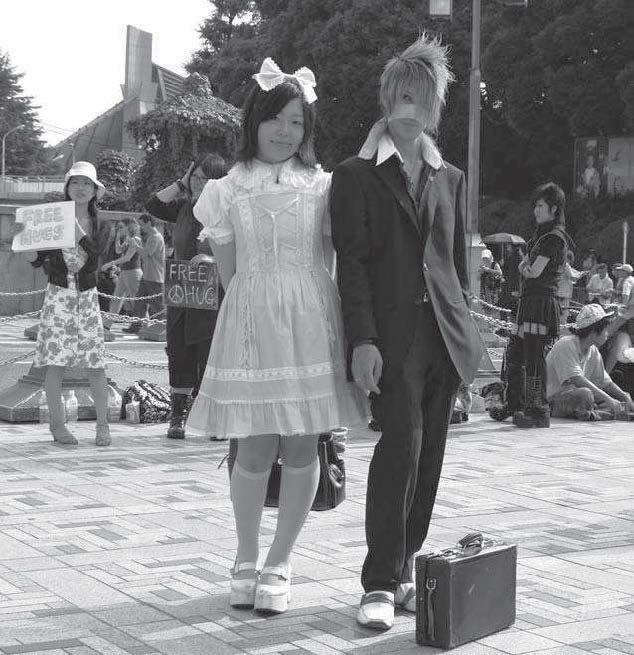
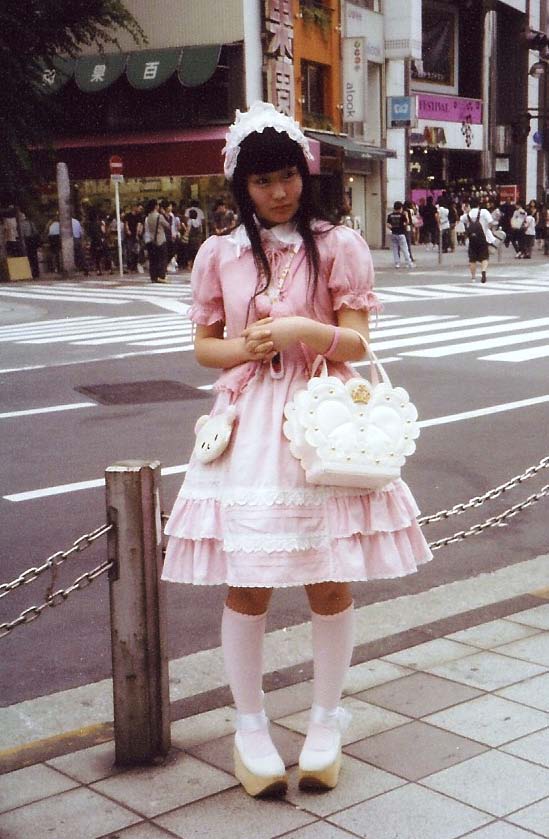
The face of the Lolita movement is the Gothloli (gosurori), or Gothic Lolita, a young woman whose style, based on little girls’ fashions of the Rococo, Romantic and Victorian periods, is signified by her doll-like or ‘childish’ appearance. As the Gothloli also collects and plays with dolls, her preoccupation is seen as superficial and infantile, and often disregarded as merely another aspect of the Japanese obsession with all things ‘cute’ (kawaii). However, this dismissive attitude overlooks more complex psychological and sociological issues behind this motivation. It also fails to recognise the subculture as a tribal empowerment against the so-called ‘Lolita Complex’, the attraction to young girls by older men.

How, though, does one battle against a paradigm of male dominance and female victimisation from a position that appears to adopt the very construct that is being challenged?

Herein lies the paradox. What is shocking about the Lolita subculture is that, although Gothloli choose to deny any sexual connotations, the adoption of a seemingly submissive, yet sexually provocative, identity, even in the acceptance of the Lolita tag, is controversial and contentious, and thus rebellious.

This paper discusses the notion of the Japanese Lolita subculture as a new form of feminist resistance.”

Reference:
Feldman, H. J. L. (1996). The Lolita Complex, World Art (Australia), (2), 52-57.
Hardy Bernal, K. A. (2011). The Lolita Complex: A Japanese fashion subculture and its paradoxes [Master of Philosophy thesis, Auckland University of Technology].

Tuwhera Open Access: https://hdl.handle.net/10292/2448

Abstract

“My thesis investigates complex issues implied by and connected with the Japanese movement known generally as Gothic & Lolita (G&L), focussing specifically on the Lolita fashion-based subculture and psychological motivations behind it.

It discusses the transmigration of the movement’s ideas from Eastern to Western to Eastern societies, including differing cultural interpretations of ‘Lolita’ and their implications in terms of the Lolita phenomenon, while examining ideologies in context with conflicting connotations and paradoxes that arise from a label that combines perceptions about ‘Lolita’ with the ‘Gothic’. It also addresses the ‘Lolita Complex’, a term that stems from the narrative of Vladimir Nabokov’s Lolita and is applied to a syndrome affecting older men and their attraction to young girls, and explores its associations with the Lolita subculture. The Lolita Complex, as the title of this thesis, also refers to the problematic complexities connected with and inferred by the movement.

This thesis is multi-disciplinary. Although the emphasis is related to Fashion (or Design) History and Theory, my research also spans the fields of Subcultural Theory, Gothic Studies, Gender Studies, Asian Studies and Anthropology. It leans, though, more to the ‘theoretical’ side, while my methodological approach relates closely to Analytic or Psychoanalytic Art History, based on my education and training as an Art and Design theorist.

As such, this study is an analysis of the Japanese Lolita subculture. It is my theory or my reading of this cultural phenomenon, supported by evidence to state the overriding argument that the Lolita movement is symbolic of and represents a generation of young women who refuse to enter adulthood and ‘grow up’.”

Photo credit: Kathryn A. Hardy Bernal (2007). Hinako (model), Shinjuku, Tokyo, Japan.

Chuang, B. K. Y., & Hardy Bernal, K. A. (2008). Loli-Pop in Auckland: Engaging Asian communities and audiences through the Museum.

Sites: A Journal of Social Anthropology and Cultural Studies, 5(2), 81-110. https://doi.org/10.11157/sites-vol5iss2id103

ABSTRACT

“This paper discusses how museums and galleries might positively engage with Asian audiences and bring Asian communities into the museum environment.

Museums are cultural institutions that should reflect, preserve, interpret and promote cultural heritage and communities. In the local Acts of the four major metropolitan museums in New Zealand, there are specific requirements for these institutions to represent their communities’ ethinic diversities.

New Zealand has become increasingly multicultural. According to New Zealand’s 2006 census, 17.8 percent of New Zealanders are of non-Pakeha, non-Maori ethnicity, and 22.9 percent were born outside New Zealand.

With the growing number of Asians living in New Zealand, and in particular Auckland, a question may be raised as to whether local museums truly reflect and engage with these communities.

Using the example of the exhibition Loli-pop: a downtown Auckland view on Japanese street fashion as a case study (Auckland War Memorial Museum, 14 September – 26 November, 2007), the authors explore how New Zealand museums and galleries can effectively reflect and communicate with Asian audiences through exhibition.”

Photo credit: Bevan K. Y. Chuang (2007, 8 July). Kaina Kisaragi and Kanade Asakiri at the Jingu-bashi, Harajuku Station Bridge, at the entrance to the Meiji-Jingu Shrine, Harajuku, Tokyo, Japan.

Hardy Bernal, K. (2007). Kamikaze Girls and Loli-Goths [Conference paper, full text].

Presented at Fashion in Fiction: An International Transdisciplinary Conference (2007, 26-27 May), University of Technology, Sydney Australia.

ABSTRACT (2006)

Kamikaze Girls (dir. Tetsuya Nakashima, 2004) is a film that both extracts and informs the Japanese fashion subculture of the Elegant Gothic Lolita (EGL, gosuloli or Loli-Goth). Based on a light novel by Novala Takemoto (2002) and spawning Yukio Kanesada’s manga version in 2005, it is an example of shojo (teenage girls’) fiction. Released in Japan as Shimotsuma Monogatari, or Shimotsuma Story, Kamikaze Girls tells of the two unlikely companions, Momoko Ryugasaki (Kyoko Fukada), a ‘Sweet’ Lolita obsessed with the designer label Baby the Stars Shine Bright, and Ichigo (‘Ichiko’) Shirayuri (Anna Tsuchiya), a yanki, or biker-punk, member of a rough all-girl bōsōzoku (motorcycle gang). The narrative operates on a somewhat allegorical level and is certainly of a comical nature, weaving the girls’ histories throughout a fantastic multi-media world of anime, music video, and live-action sequences. On the surface, this colourful foray appeals as light entertainment yet on another level represents more topical cultural issues.

Kamikaze Girls interfaces with the realm of the EGL (Elegant Gothic Lolita) and the notion of ‘cute gothic’. It has been said that Japan’s obsession with all things cute, or the kawaii phenomenon, represents an ‘infantile mentality’ (Kageyama, 2006) and a reluctance to ‘grow up’ (Kirby, 2006). It has also been related in general to post-war Japan’s perpetuating uncertainties about the future (Parker, 2004). In terms of the Lolita, Rika Kayama says that the dressing as frilly babies symbolises still a deeper anxiety, instigated in the 1990s by economic instability and the wish to hang onto childhood security (Parker, 2004). This is perhaps one reason why the cult translates, for a minority of male followers, to that of the Elegant Gothic Aristocrat (EGA). For Japanese girls, though, this fear of adulthood is more pertinent in the face of the harsher realities of womanhood. This is interesting in terms of the sexual connotations of the Lolita in the West and the sexual ambiguities of the EGL. The focus of this paper, therefore, will be how Kamikaze Girls reflects more complex attitudes related to sexuality, gender and Japanese society via competing images of the ‘cute’ and the gothic’.”

References:
Kageyama, Y. (2006, 16 June). Cute is king for the youth of Japan, but it’s only skin deep. The New Zealand Herald.
Kirby, A. (2006, 22 July). The fashion victims who refuse to grow up. The Times (London).
Parker, G., (2004, 25 September). Parasols and pink lace: Japan’s Lolita girls, ‘I’d like to go back in time, like to the era of Marie Antoinette’, says 24-year-old nurse. Globe Style, The Globe and Mail.

Dr. Kathryn A. Hardy Bernal, Ph.D.

Art, Design, Fashion & Cultural Historian, Critical Theorist & Anthropologist

Dr. Kathryn A. Hardy Bernal, Ph.D., M.Phil. (Hons., First-class), B.Art.Th. (Hons., Distinction), is an art, design, fashion and culture historian, critical theorist, and anthropologist. She has been recognised by the Humanities and Law panel of the Tertiary Education Commission of New Zealand as a specialist in the fields of History, History of Art, Classics, and Curatorial Studies. She has extensive experience within the tertiary teaching and learning sector, including senior leadership and lectureship positions. Her previous roles include Head of Research and Postgraduate Studies at the Yoobee Colleges, across New Zealand (incorporating Yoobee College of Creative Innovation and South Seas School of Film and Television); and Programme Leader (Deputy Head) of the Department of Fashion and Textiles, Senior Lecturer/Lecturer in Fashion, Textiles, Product, and Graphic Design, and Coordinator of Contextual and Theoretical Studies, at Auckland University of Technology. She has also taught Art History and Theory, and Design History, Theory and Aesthetics, at the University of New South Wales, Sydney, Australia.

Dr. Hardy Bernal’s transdisciplinary Ph.D., Doctor of Philosophy in Visual and Material Culture, crosses the intersections of art, design, fashion, costume, anthropology, psychology, sociology, history, religion, and cultural studies. Completed by written research, her thesis explores the Mexican development and transmigration of a Japanese subcultural fashion movement, and subsequent shifting ideologies and psychologies, through methodologies of critical art theory, and qualitative ethnographic studies, particularly in relation to indigenous, colonial, postcolonial, traditional, historical and contemporary philosophies, practices and beliefs, undertaken by field studies and research trips to Japan and Mexico.

Leadership expertise includes academic staff research management, mentorship, and development, and editorial administration. She has successfully convened several international academic conferences and collaborative symposia and is published in peer-reviewed academic press journals and books. She maintains a strong network of professional academic peers, nationally and internationally.