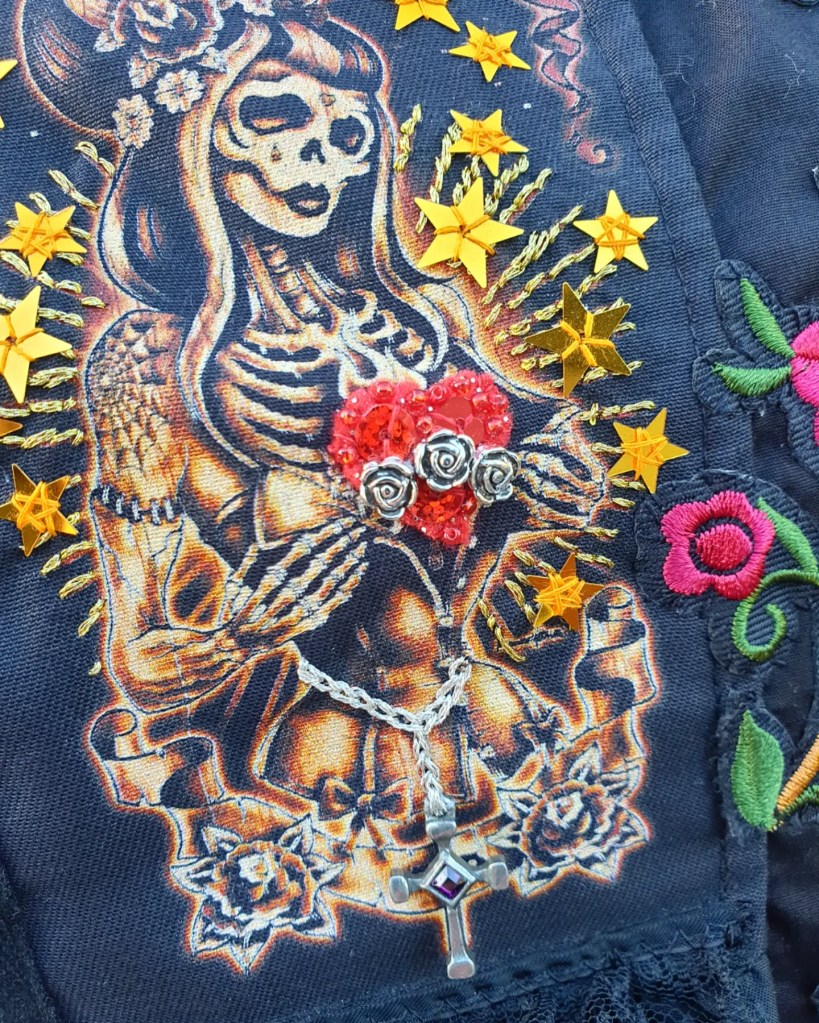
Photo credit: Kathryn A. Hardy Bernal (2023). Una Colección de Moda, “El Amor Nunca Muere”: Deconstructed/Reconstructed Gothic & Lolita Fashion by “Botticelliangel” (Kathryn A. Hardy Bernal).
1. Screen-printed clothing patch: Modified by my embroidery, my hand-beaded immaculate heart, and Gothic Alchemy pewter cross set with amethyst 2. Dangerfield Gothic Secrets Cropped Blouse 3. Bodyline L075 Blouse 4. Bodyline L466 JSK Dress 5. Bodyline L380 Skirt 6. Restyle Vampire Aristocrat Skirt: Modified by my embroidery and pewter cross set with crystals
Inspiration: 6. Sagravera = Sagrada + Calavera = Sacred Skull + Vera = Truth 7. La Catrina Calavera/Día de Los Muertos 8. Santa Muerte/Saint Death/Muerte Eterno/Eternal Death/Lady Death 9. Mariposas (butterflies) symbolising the return of souls/spirits 10. Red roses/Immaculate Heart (Corazón Inmaculado): La Virgen María
In IFFTI Annual Proceedings 2 (pp. 401-426). International Foundation of Fashion Technology Institutes.
ABSTRACT
“This paper examines the emergence of the alternative fashion-based Gothic and Lolita movement in Mexico, and its development from its Japanese streetstyle foundations. It investigates its intentions, motivations, symbolism, and intertextual cultural and religious associations, particularly connected with the festivities and rituals of Día de Los Muertos, or Day of the Dead. The focus is on the prevalence of the distinctive aesthetics of La Calavera Catrina in the Mexican expression of the subcultural Gothic Lolita identity.
The iconic image of a grinning female skeletal character, adorned by a huge, feathered chapeau, is ubiquitous in Mexico. Known as La Catrina Calavera, she was created some time around 1910 by the Mexican political satirist and lithographer, José Guadalupe Posada, and made famous by the radical Mexican artist, Diego Rivera. The figure of Catrina, la calavera (‘the skull’), has since become a mascot of Día de Los Muertos, Day of the Dead.
Día de Los Muertos is a time of remembrance and celebration of those who have passed to the afterlife, and a chance for the souls of the deceased to revisit their loved ones in the earthly realm. As such, rituals pertain to both the memorial and the presence of the ancestors.
Associated with the Catholic feast days of All Saints and All Souls, as well as Hallowe’en, Día de Los Muertos has also evolved from pre-Hispanic traditions. The customs of the festival have thus emerged from the syncretism of colonial and indigenous belief systems.
Resonating from this hybrid landscape is the subcultural fashion-based identity of the Mexican Gothic Lolita. While the Mexican incarnation draws from the Japanese model and continues to weave together sartorial sensibilities of the Rococo, Romantic, and Victorian eras, historical mourning dress, twentieth century goth style, and neoromantic, neogothic fashion movements, it has also evolved to reflect its own cultural flavor.
The Mexican Gothic Lolita style introduces a novel eclectic fusion, influenced by local indigenous, historical, and contemporary sources, and inspired by Mesoamerican, Spanish colonial, Catholic, Gothic, Baroque, and Hispanic iconographies, motifs, and spiritualities.
This unique manifestation of the Gothic Lolita is supported, in Mexico, by an independent, creative, handmade fashion industry, yet to be co-opted into mainstream culture, which lends itself to the do-it-yourself aspect that enables its individuality to flourish. As such, the Mexican Gothic Lolita transforms and rearranges semiotic elements of the original style to make new statements.
This research stems from my completed doctoral thesis, which utilized ethnographic field studies and surveys, undertaken in Mexico, and online, in order to recognize the contributions of the subculture’s participants, to hear their voices, and discuss their inspirations in context. Also explored were the ways in which the Mexican movement reflects, and differs from, the philosophies of the original Japanese movement.
This paper addresses some of those aspects, while analyzing complex symbolism embedded in the innovative subcultural expression of La Catrina Lolita.”
Gothic Lolitas in Mexico (2017, July 23), during El Baile de Las Rosas, Hotel Palacio San Leonardo, Ciudad de Puebla, Puebla, México. I’m second in from the right!
“This thesis, completed for the award of Doctor of Philosophy in Visual and Material Culture, Ph.D., examines the development of the fashion-based Mexican Gothic and Lolita movement, and its evolution from its subcultural Japanese roots. It asks, ‘What are the cultural conditions that encourage this movement to flourish in the Mexican environment?’ In turn, ‘What does Mexican culture contribute to Mexican Gothic and Lolita style?’ And, ‘What does Mexican Gothic and Lolita style say about Mexican culture, society, and beliefs?’
The Gothic and Lolita movement is currently thriving in Mexico as an authentic, independent, creative, handmade fashion industry, yet to be co-opted into mainstream culture. With the do-it-yourself aspect of the movement comes its own, unique, cultural flavour. As such, it transforms and rearranges meanings of the original subcultural style in order to make new statements, which subvert the meanings, and understandings, of the Japanese Lolita identity.
Analyses of Mexican Gothic and Lolita styles, in context with the Mexican environment, culture, and belief systems, as well as the operation of the Mexican Gothic and Lolita industry, are major focal points of this study. Also investigated are the ways the movement reflects, fits into, and departs from, the philosophies of the original subculture, especially regarding sociocultural and gender politics. These latter aspects are critiqued in context with ‘normative’ gender positions, roles and hierarchies, within mainstream Japanese and Mexican societies.”
Photo credit: Kathryn A. Hardy Bernal (2017, July 23). Regina Morales (model); Claudia Baez for Puppets (dress and headdress); Gabriela Canton for Stella Maris (necklace); Fernando Díaz for Enid Hallow (shoes). El Baile de Las Rosas, Hotel Palacio San Leonardo, Ciudad de Puebla, Puebla, México.
“From its inception, the subcultural movement known as Gothic and Lolita has displayed an exchange of ideas between Japan and Euro-American cultures. More recently, however, the subculture has shifted, not only regarding traditional meanings, and the way that it operates, but also geographically, into communities on the periphery of its original sites of major interest. In the past few years, Latin-American nations, particularly Mexico, have become conspicuous hotspots for participation in the movement.
This transition raises questions about differing socio-politics and cultural understandings, particularly associated with gender. As a girls’ subculture, Gothic and Lolita broke with historical, stereotypical frameworks that positioned subcultural movements from a male-dominated perspective. In Japan, it also demonstrated a resistance to established roles for, and expectations of, women. As such, it can be argued that the original Japanese Gothic and Lolita movement represented a new type of feminism. Over time, as the subculture transmigrated into other sites, especially the United States, United Kingdom, Canada, Australia, and North-Western Europe, this context became less pertinent.
However, the relatively recent growth of Gothic and Lolita communities in Mexico exhibits a new phase of the movement, which shakes up past meanings and understandings, yet again, especially in terms of gender politics.
How is gender understood within the Gothic and Lolita movement in a Mexican environment? Why is this movement becoming prevalent in Mexico? How does it operate? And, how is it transformed from its Japanese origins?
As both an ‘insider’ and ‘outsider’ researcher of the Gothic and Lolita subcultural movement, this paper reveals some of the outcomes to these questions via a critical analysis of ethnographic studies undertaken with members of the movement in Mexico.”
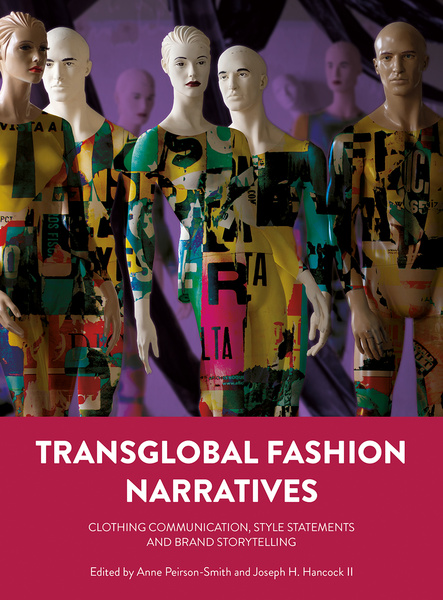
Chapter 5: In A. Peirson-Smith & Hancock II, J. H. (Eds.), Transglobal Fashion Narratives: Clothing Communication, Style Statements and Brand Storytelling (pp. 91-114). Intellect. ISBN 9781783208449 https://www.intellectbooks.com/transglobal-fashion-narratives
ABSTRACT
“The fashion style of the ‘Gothloli’ (Gosurori, Gosu-loli, or Gothic Lolita), a member of the contemporary ‘Lolita’ subculture, is inexorably bound to the archetypal ‘Alice’. Members of this movement dress in garments inspired by the Victorian age, whilst the silhouette is reminiscent, particularly, of Sir John Tenniel’s illustrations for Lewis Carroll’s heroine, and defined by Walt Disney’s, Alice. Most often, the design is referential and, other times, the translation is more literal, whereby outfits may be decorated with Alice figures and motifs.
The Alice-Lolita image is prolific, especially in Japan. Here, the relationship between Alice and Lolita also appears in other areas of popular culture, such as shōjo graphic novels and anime, and in the art of Nori Tomizaki. In Tomizaki’s digital paintings and manipulated photographs of doll-like figures, or lifelike dolls, there is an emphasis on the Gothic, whereby Alice and the Gothloli are juxtaposed to represent the epitome of a sweet-but-scary little girl.
However, there may be more than a superficial connection between Alice and Lolita, in that, it may be argued, there is perhaps no coincidence that the author, Lewis Carroll, or Charles Lutwidge Dodgson (his true identity), is believed to have suffered from a syndrome known as the ‘Lolita Complex’, the condition that takes its name from the female protagonist of Vladimir Nabokov’s notorious novel, [Lolita,] and is designated as an obsession with young girls. Though – whilst Carroll’s Alice stories, Nabokov’s Lolita, and Gothloli are similar, in the fact that they all serve to immortalise the Little Girl – the Lolita fashion style, formed in Alice’s image and bearing the title of the Nabokovian child is determined to be neither directly nor circumstantially related to its namesake.
This chapter explores these intertextual relationships between Alice, Lolita, and the fashion-based movement, and investigates the validity of the subculture’s identity with the Lolita Complex.”
“Written and directed by the neo-Mexican visual artist Antonio Álvarez Morán, produced by Guillermo Artasanchez, and shot in Puebla, Mexico, Los Misterios de Las Monjas Vampiras (The Mysteries of the Vampire Nuns) is proposed as a collection of short, surrealist, arthouse, black comedy films. The first completed episode of the series pilot, “Primer Misterio: Las Monjas Vampiras contra El Hijo de Benito Juárez” (“First Mystery: The Vampire Nuns vs. the Son of Benito Juárez”), was previewed on July 19, 2017, at the Auditorio Guillermo y Sofia Jenkins, Universidad de Las Américas, Puebla (UDLAP), San Andrés, Cholula, Mexico.”
“Antonio Álvarez Morán: From Crowned Nuns to Vampire Nuns”
Online keynote conference address by Antonio Álvarez Morán (renowned Mexican fine artist, painter, muralist, photographer, performance artist, film director, screenplay writer) from Ciudad de Puebla, Puebla, México, to the Cordis Hotel, Auckland, New Zealand, on Wednesday 14 December 2022. Organised and introduced by Dr. Kathryn A. Hardy Bernal, Head of Research and Postgraduate Studies at Yoobee College of Creative Innovation, Convenor of Media, Culture, and Society: The Inaugural International Academic Conference of UP Education (Australia and New Zealand).
Note that, due to technological connection difficulties, this broadcast cuts out just minutes before the completion of the presentation.
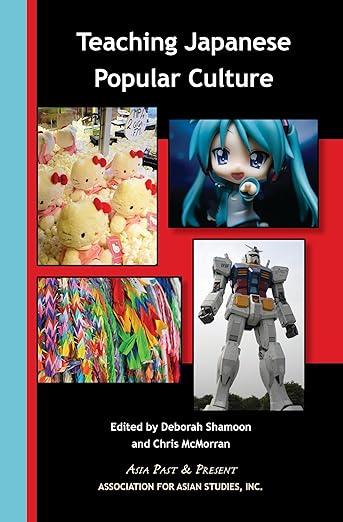
“Teaching Japanese Popular Culture is a multiauthor publication edited by Deborah Shamoon and Chris McMorran. The impetus for this project was generated by an international conference of the same name, organized by the book’s editors, and assisted by Kim Thiam Huat.
The conference was hosted by the Department of Japanese Studies at the National University of Singapore, Faculty of Arts and Social Sciences, November 11–12, 2012. It was supported by the Japan Foundation and coincided with the Anime Festival Asia, one of the largest conventions of its type to be held in Southeast Asia.
This event was a drawcard for scholars in the field who were brought together to review their interests in strengthening pedagogical methods for teaching popular culture from Japan. The aim was also to share strategies for incorporating subject matter from Japanese popular culture, such as film, manga, anime, TV drama, fashion, art, design, and music, into curricula for teaching other disciplines. This book reflects some of the outcomes.”
“This article investigates the concept of constructing a ‘Lolita’ identity in virtual space. It explores how members of the Japanese fashion-based Lolita subculture use the Internet to formulate images of their desired selves in order to gain acceptance, and establish an ‘authentic’ presence, within worldwide Lolita communities. While members may be geographically separated, they are united in the virtual world. The affinity gained through online forms of interchange, especially social networking sites, is pertinent for Gothloli who live outside Japan, the movement’s place of origin, especially if real-life interactions are made less possible by lack of local congregation. However, a downside of Internet visibility, and a consequence of the ability to hide behind an ‘anonymous’ profile, is the prevalence of cyberbullying, due to pressures to ‘fit in’, and thus competition and jealousy. This article focuses on these paradoxes and the positive and negative influences on the Lolita subculture in virtual space.”
Part 1, Chapter 7: In Tarrant, S., & Jolles, M. (Eds.). Fashion talks: Undressing the power of style (pp. 117-132). State University of New York Press: https://sunypress.edu/Books/F/Fashion-Talks
ABSTRACT (2008)
“‘Lolita is back’. As early as 1996, Hannah J. L. Feldman made this statement in regard to a newly emerging phenomenon, represented at the time in art and popular culture, by a ‘triumphant emblem of a newly configured’ feminist model for the young woman, who, unlike Vladimir Nabokov’s 1955 heroine, ‘no longer represents a young girl’s vulnerability to an older man’s lascivious desires’ (p. 52). ‘To be Lolita’, she declared, now ‘means to take control… and to reverse the pejorative connotations of [male dominance] and aggressive sexual behavior’ (Feldman, 1996, p. 52). Under this particular banner of ‘Lolita’, a fashion-based youth movement has grown, known as Gothic & Lolita, a youth street subculture that originated in Japan and is rapidly gaining worldwide appeal.
The most prominent face of the Gothic & Lolita subculture is the Lolita, herself (gothloli, gosurori), the young woman whose style, based on little girls’ fashions of the Rococo, Romantic and Victorian periods, is signified by her doll-like or childish appearance. As the Lolita also commonly collects and plays with dolls, and sometimes parades with them on the street, this preoccupation is, therefore, often seen as superficial and meaningless, and disregarded as merely another development of a perceived Japanese obsession with all things ‘cute’ (kawaii), which has been represented in terms of an ‘infantile mentality’ (Kageyama, 2006). However, this dismissive attitude overlooks more complex psychological and sociological issues behind the motivation towards participation in the Japanese Lolita movement. It also fails to recognise the subculture as a ‘transgressive model for representing female sexuality’ (Feldman, 1996, p. 52).
As it is essentially a ‘feminine’ movement, the Lolita subculture is unique. What sets this phenomenon apart from the subcultural ‘model’ is that the face of the Lolita is paradigmatically female. Whilst, according to Dick Hebdige’s observation that ‘girls have [in the past] been relegated to a position of secondary interest within both sociological and photographic studies of urban youth, and masculine bias [has existed]… in the subcultures themselves’, the Japanese Lolita movement, as highlighted by Yuniya Kawamura (2007), is essentially a girls’ subculture (p. 344), which may be understood in terms of a tribal empowerment against the so-called ‘Lolita Complex’, a term applied by sociologists in Japan to a ‘male desire for girlish women’ (Feldman, 1996, p. 55).
How, though, does one battle against a paradigm of male dominance, female vulnerability and victimisation, from a position that appears to adopt the very construct that is being challenged? The Lolita, after all, in her embrace of frills and childish frippery, may lead one to suggest that her behavior is, in fact, frivolous and morally irresponsible. Herein lays the paradox. What is shocking about the Lolita subculture is exactly this: Although many members (Japanese or otherwise) choose to deny any sexual connotations in regard to their appearance, the Lolita’s adoption of a seemingly submissive, yet sexually provocative identity (even in the acceptance of the Lolita tag) is controversial and contentious, and therefore rebellious. However, the new Lolita reclaims her right to be feminine. She hijacks the male fantasy, turns it on its head, takes possession of and power over it, and escapes with it to her own realm, one that is instead controlled by a force of ‘girlish’ women.
This chapter discusses the impetus for this Lolita phenomenon in Japan and its increasing relevance and importance for young women worldwide.
References: Feldman, H. J. L. (1996). The Lolita Complex. World Art (Australia), (2), 52-57. Kageyama, Y. (2006, 16 June). Cute is king for the youth of Japan, but it’s only skin deep. The New Zealand Herald, B3. Kawamura, Y. (2007). Japanese street fashion: The urge to be seen and to be heard. In L. Welters & A. Lillethun (Eds.), The Fashion Reader (pp. 343-345). Berg.





 Kathryn A. Hardy Bernal